

Consultation process · Malta
What happens during an online nutrition consultation
Knowing the shape of the appointment takes most of the uncertainty out of it. Here is what occurs before, during and after a session, so you can arrive prepared rather than guessing.
The three parts of a session
An online nutrition consultation is not a single conversation. It has a before, a middle and an after, and each part does a different job. The prep you do affects how much ground the call can cover. The call itself is where your history, your current eating and a workable plan meet. The week after is where the plan either fits or shows you where it needs to change.
Sessions run by video, so nothing here depends on you travelling to a clinic. You join from home, and the notes you receive afterwards are yours to keep, re-read or share with your doctor if that is useful. The sections below follow the appointment in order, from the email that confirms your slot to the review that comes three to six weeks later.
Before the call
Once your request is confirmed
You receive an email with the time, the video link and a short list of what to have ready. Nothing on that list is difficult to gather, and anything you cannot find is not a reason to postpone the session.
If a food diary for two or three days beforehand is realistic, keep one. The appointment moves faster when the picture is already on paper, but it is not required and nobody will ask you to justify a busy week.
- Recent blood results Any test results from the last twelve months give the session a factual base. If you have the numbers but not the report, the numbers alone still help.
- Medications and supplements A written note of what you take, how often and for how long. Some medications shift appetite, digestion or how your body handles certain foods, and that changes the advice.
- A normal day of eating Not your best day, not a plan you copied from somewhere. A rough account of breakfast, lunch, dinner, snacks and drinks on an ordinary weekday is the single most useful thing you can bring.
- A quiet place and working connection The call works best when you can speak freely. Headphones help if your household is busy, and a phone on a stand is enough.
Preparation is optional beyond the first item
The first few minutes set the target
The call opens with a check on what you want out of the session. This matters because two people with the same diagnosis often want completely different things. One wants to lower blood sugar; another wants to stop feeling exhausted at three in the afternoon. Same starting point, different destination.
The nutritionist writes your goal down in your own words. That sentence gets read back at the review, so a plan can be measured against what you actually asked for rather than what a generic programme assumes you need. If your goal shifts over the following weeks, say so at the review and it gets rewritten.
You are welcome to say at this point if there is something you would rather not discuss. That is noted once and does not come up again unless you raise it.
What a goal sounds like
- Stop the afternoon energy crash before it starts.
- Eat lunch at work without relying on the same sandwich every day.
- Keep the Friday takeaway and fix the four days around it.
- Understand a recent blood result well enough to talk to my doctor about it.
Medical background
Conditions you have, conditions that run in the family, past surgeries and anything you are currently being treated for. Each one narrows the range of sensible advice.
Daily pattern
Sleep, stress, shift work, commuting, when you actually get to eat. A plan that ignores a rotating shift rota will be abandoned by the second week.
Digestion and allergies
Bloating, reflux, irregularity, intolerances, foods you avoid and why. This is also where you mention anything you would rather not repeat later in the call.
Reviewing what you eat now
A typical week, not a perfect one
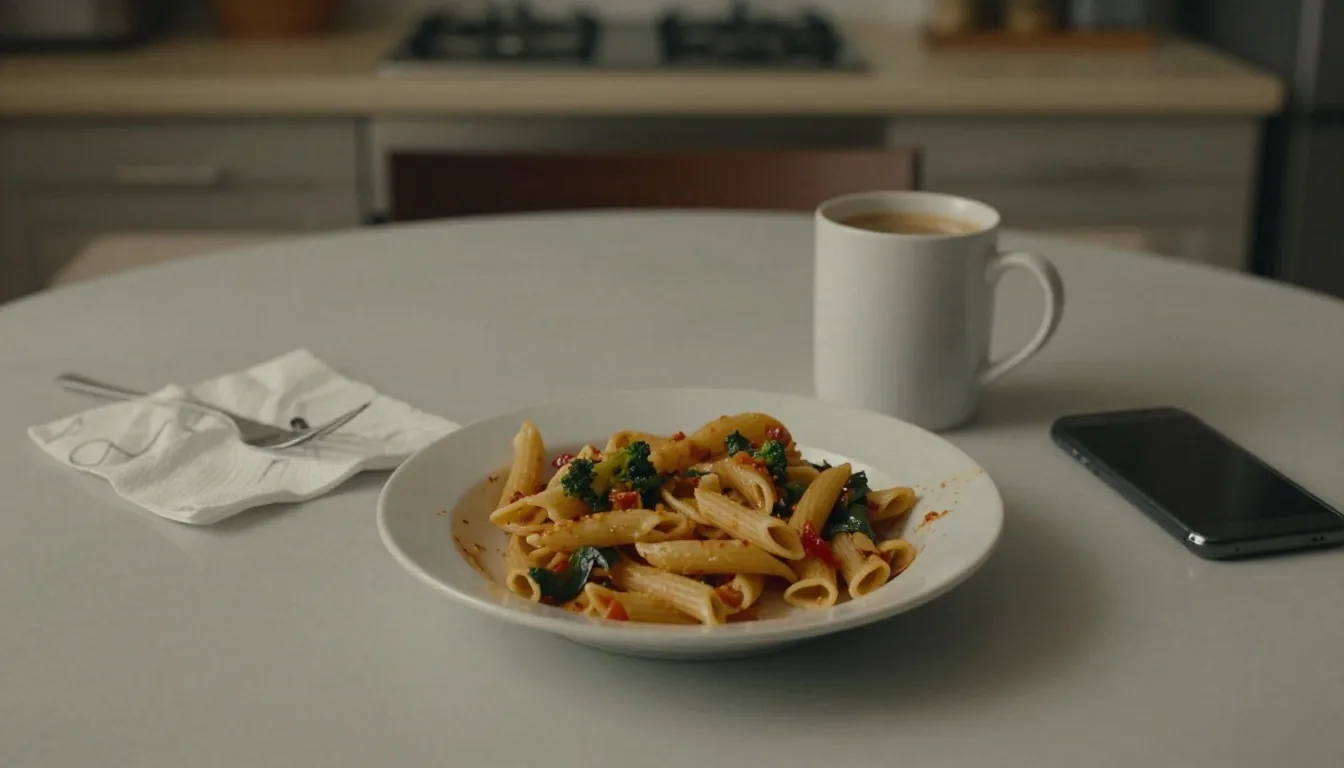
You walk through meals, snacks, drinks, takeaway and the days where everything falls apart. There is no scoring and no judgement here. The point is accuracy, because a recommendation built on a polished version of your week will not survive contact with your actual Tuesday.
If you kept a food diary, this is where it gets used. The nutritionist will ask about portion sizes in plain terms, look for patterns rather than individual meals, and check whether the gaps in your day line up with the times you feel worst.
By the end of this part of the call, the picture is on the table. That is what makes the next stage possible: two or three priority changes chosen because they fit your week, not because they look good on a list.
Example: what changed for one client
A shift worker eating nothing between 1pm and 9pm added one substantial snack at 4pm. Nothing else changed that month. The evening overeating she had described in the intake stopped within a fortnight.
Building the plan together
Two or three priority changes
By this stage the nutritionist has enough to suggest what to change first. These are discussed rather than announced, because a change you disagree with will not survive the week. You are the one who has to live with it.
You might settle on a different breakfast, a planned afternoon snack, or a way to handle the Friday takeaway without abandoning the rest of the week. What comes out of the session is a short list with reasons, not a regime.
- Change A breakfast that holds until lunch Usually the first thing adjusted, because it affects hunger for the next six hours. Addressed in plain terms: what to put on the plate, not what to remove.
- Change A planned snack at the crash point Scheduled before the dip, not after it. Chosen around what is available at work, at home or on the road that day.
- Change Keeping the takeaway, changing the week around it Food rules that require you to give up the things you enjoy tend to fail. This approach adjusts the surrounding days instead, which is usually easier to keep.
Before the call ends, you agree which change you will try first. One is normally better than three, because it is easier to tell what worked.
After the session
What you receive afterwards
A written summary is sent after the session. It covers what was discussed, the changes you agreed and any questions left open. There is no thirty-page document. The summary is short enough to actually use, which is the whole point.
Written in plain language
No shorthand and no codes. You should be able to re-read it in a fortnight and still follow every line, without the call to remind you what was meant.
Yours to share
If it helps your doctor, your physiotherapist or your coach, send it on. Many people bring the summary to their next GP appointment.
Open questions listed
Anything that could not be answered on the call is written down with a note on what would help settle it, so nothing is quietly dropped.
Your goal, restated
The sentence you gave at the start of the call sits at the top of the summary. At the review, it is the first thing read back.
If you have already booked, your summary arrives at the email address used for the booking. If you have not booked yet, this is what booking a consultation leads to.
Reviews and long-term check-ins
Most people book a review three to six weeks later. That gap is deliberate: long enough for the initial changes to either work or reveal a problem, short enough that you still remember what you were trying. Reviews are shorter than the first session and focus on what happened in between.
At that point the plan is adjusted rather than restarted. If one change turned out to be impractical, it is replaced. If one worked well, it is kept and the next priority moves up. Longer-term clients often move to occasional check-ins once things stabilise, at whatever interval suits them.
Between sessions you can email short questions. The nutritionist replies during working hours, Monday to Friday, 9:00 AM to 6:00 PM. For anything longer than a couple of lines, it is usually better to bring it to the next review where it can be discussed properly.
Typical rhythm
- First session Intake call, up to an hour History, current eating, two or three agreed changes, written summary after.
- Three to six weeks later First review What worked, what did not, what gets adjusted next.
- As needed Occasional check-ins Once things stabilise, spaced out to whatever suits your situation.
- Any time between Short email questions Answered during working hours, Monday to Friday.
If the plan is not working
Sometimes the first set of changes does not fit your life, and that is normal rather than a failure on your part. The review exists precisely to catch that. The plan gets adjusted rather than repeated with more insistence, because repeating advice that already did not work is not a strategy.
If after a few sessions nothing is shifting, the nutritionist will say so plainly. At that point the conversation turns to whether a different approach would suit you better, or whether another professional is the right route. That might be your GP, a gastroenterologist, a physiotherapist or a mental health clinician, depending on what the sessions have surfaced. Being told honestly that nutrition work is not the bottleneck is more useful than being sold another block of appointments.
You can also stop at any point. There is no package that locks you in, and no minimum number of sessions. If you want to take the summary away and try things on your own for a few months, that is a reasonable choice.
Practical details before you book
A few things visitors ask before their first appointment. If your question is not here, the FAQ page covers more ground.
The desk
Diet Expert Appointment, 18 Triq Naxxar, Birkirkara BKR 9042, Malta.
Consultations take place online by video. Office hours are Monday to Friday, 9:00 AM to 6:00 PM.
Email [email protected] or call +356 2149 3360.
Do I need a diagnosis or a referral to book?
No. You can book without a referral and without a diagnosis. Many people come with a broad goal, such as steady energy or a more reliable lunch routine, and the intake conversation is where the specifics get worked out.
What if I do not have recent blood results?
Bring what you have and say when it was taken. The session does not stall without them. If results from the last year are sitting in an old email, forward them across before the call and they will be reviewed in advance.
How long does the first consultation take?
Plan for up to an hour. The first session is the longest because it covers your history, your goal and a typical week of eating. Reviews afterwards are shorter, usually around thirty minutes, and focus on what has happened since.
Can I bring someone with me to the call?
Yes, if it helps. A partner, a parent or a flatmate joining for part of the call is welcome, particularly if they do the cooking. Allergies and food dislikes are easier to cover when the person preparing the meals is in the room.
Is this suitable if I am pregnant or managing a chronic condition?
Say so when you book so the session can be planned around it. Nutrition support can sit alongside medical care, but it does not replace it. For pregnancy and chronic conditions, it works best when your treating clinician is aware, and the written summary is designed to be shared with them.
Where to go next
Ready when you are
You now know what happens before, during and after an online nutrition consultation. Book a slot and the preparation email follows within the working day.